
Squeaking, Grinding or Shaking When Braking? 7 Signs Your Brakes Need Attention
Your brakes are one of the most important safety systems in your vehicle. While brake components naturally wear over time, your car will often give you warning signs before there’s a serious problem.
Squeaking, grinding, vibrations or changes in the way your brake pedal feels shouldn’t be ignored. Understanding these signs can help you know when it’s time to have your brakes inspected and potentially prevent further damage to components such as your brake pads and rotors.
Here are seven common signs that your brakes may need attention.
1. Squeaking or Squealing When You Brake
Hearing a high-pitched squeaking or squealing sound when you apply the brakes?
There can be several causes, but worn brake pads are one possibility. Many brake pads are designed to produce a warning sound as they wear down, helping alert you that it may be time for an inspection or replacement.
Occasional squeaking can also occur because of moisture, dust or other conditions. However, if the sound is persistent or getting worse, it’s worth having your braking system checked by a qualified mechanic.
2. Grinding Noises When Braking
A grinding sound is one brake warning sign you shouldn’t put off.
If brake pads become severely worn, parts of the braking system can potentially make metal-to-metal contact. This can affect braking performance and may cause additional damage to the brake rotors.
Getting the brakes inspected early could mean the difference between replacing worn brake pads and needing more extensive brake repairs.
3. Your Car Shakes or Vibrates When Braking
Does your steering wheel or brake pedal vibrate when you slow down?
Vibration during braking can sometimes be associated with unevenly worn or damaged brake rotors. Because the brake pads need to make consistent contact with the rotor surface, irregularities can create a noticeable pulsing or shaking sensation.
There can be other causes of vehicle vibration as well, so a proper inspection is the best way to identify what’s happening.
4. It Takes Longer to Stop
You know how your car normally feels, so pay attention if it suddenly seems to take longer to slow down or stop.
Reduced braking performance can have several potential causes, including worn brake components or issues within the braking system.
Don’t wait for braking performance to deteriorate further. If something feels different when stopping your vehicle, arrange an inspection as soon as possible.
5. Your Brake Pedal Feels Soft or Spongy
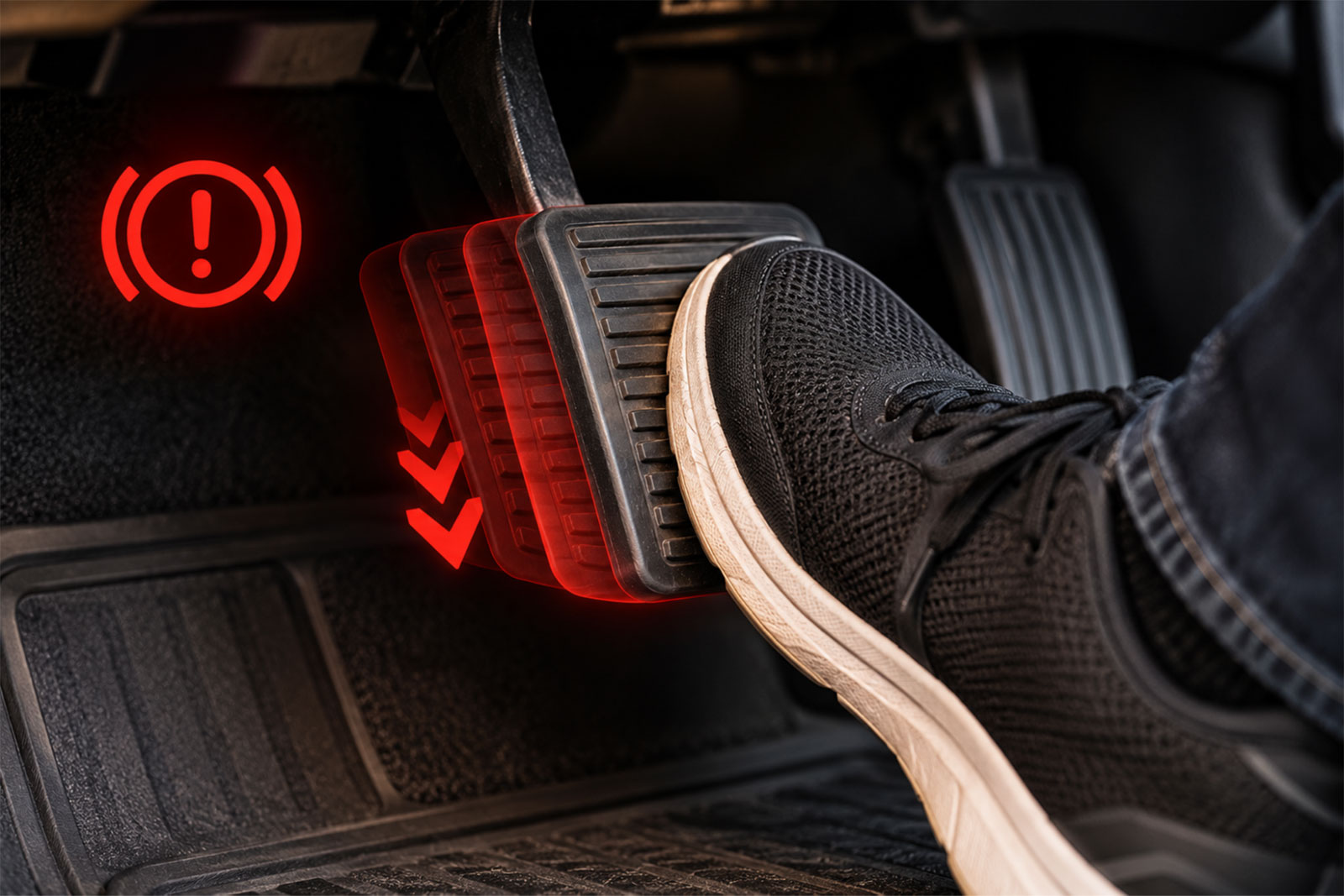
Your brake pedal should generally feel firm and responsive.
If the pedal suddenly feels soft, spongy or needs to be pressed further than usual, your braking system should be checked. Changes in pedal feel can potentially relate to brake fluid or other components within the hydraulic braking system.
Because brakes are critical to vehicle safety, unusual pedal behaviour should always be taken seriously.
6. Your Brake Warning Light Appears
A warning light on your dashboard is your car’s way of telling you something needs attention.
Depending on your vehicle, a brake-related warning light could indicate several different issues. Rather than assuming the cause, have the vehicle properly inspected and diagnosed.
If the warning light appears alongside noticeably reduced braking performance or other serious symptoms, avoid continuing to drive unnecessarily and seek professional assistance.
7. Your Car Pulls to One Side When Braking
If your vehicle pulls noticeably to the left or right when you brake, there may be an issue causing uneven braking.
This could relate to components within the braking system, although tyres, wheel alignment and suspension issues can also contribute to a vehicle pulling to one side.
A professional inspection can help determine the actual cause and what needs to be repaired.
Brake Pads, Rotors and Brake Fluid All Matter
Brake maintenance isn’t only about replacing brake pads.
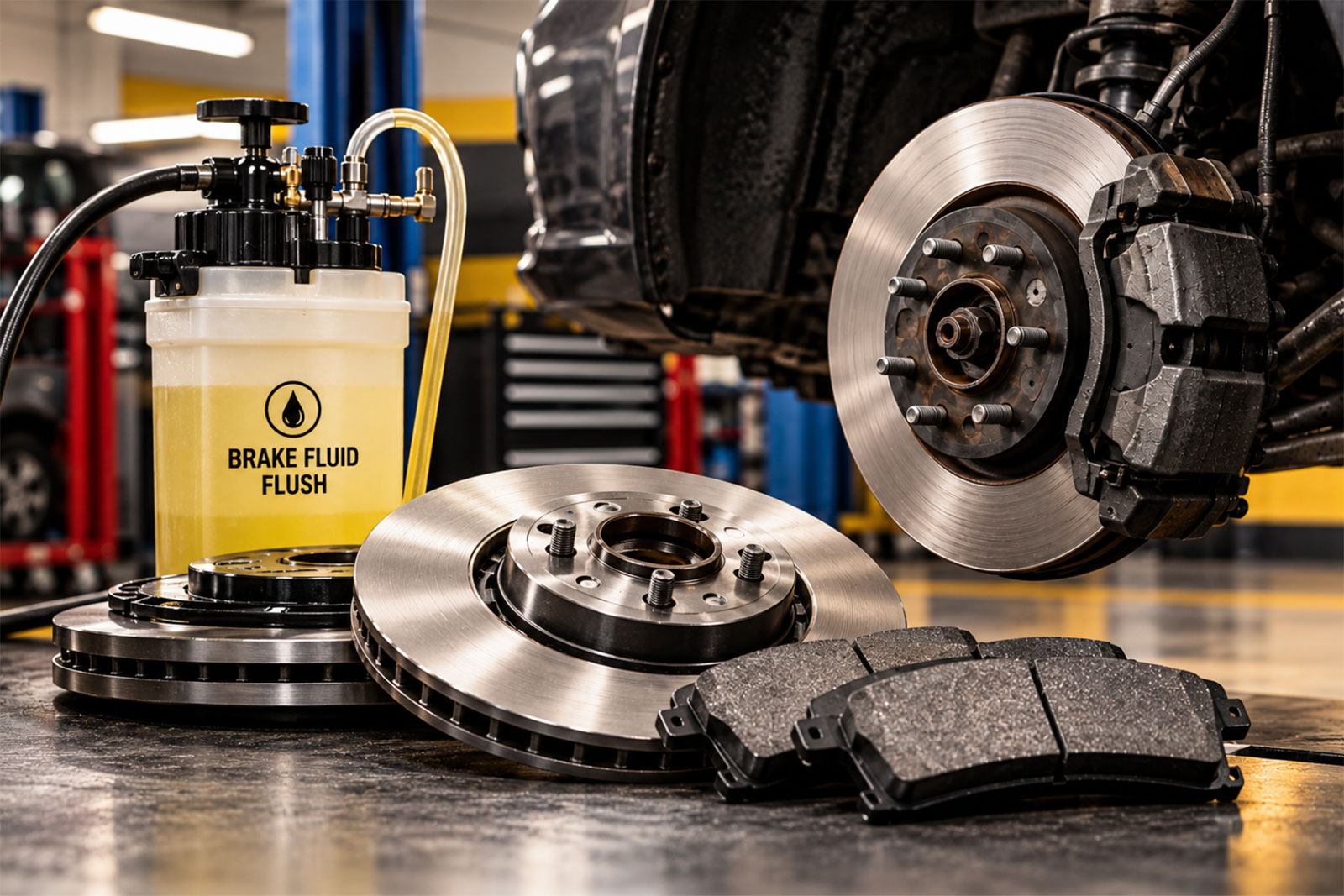
Your braking system contains several components that work together. Brake pads create friction against the rotors to slow your wheels, while brake fluid transfers the force from the brake pedal through the hydraulic system.
That’s why a proper service should consider the overall condition of the braking system rather than focusing on just one component.
How frequently brake pads, rotors or brake fluid need attention will vary depending on your vehicle, driving conditions, driving habits and manufacturer recommendations.
Don’t Ignore the Early Warning Signs
Brake problems don’t usually improve on their own. Continuing to drive with worn components can potentially reduce braking performance and turn a relatively straightforward repair into a more expensive one.
If you’re hearing squeaking or grinding, feeling vibrations when braking or simply aren’t confident about how your brakes are performing, having them inspected can give you a clearer picture of their condition.
Need a Brake Service in Blacktown?
At SK Automotive & Tyres, our team can inspect your vehicle’s braking system and advise you on any repairs or replacements required, including brake pads and rotors.
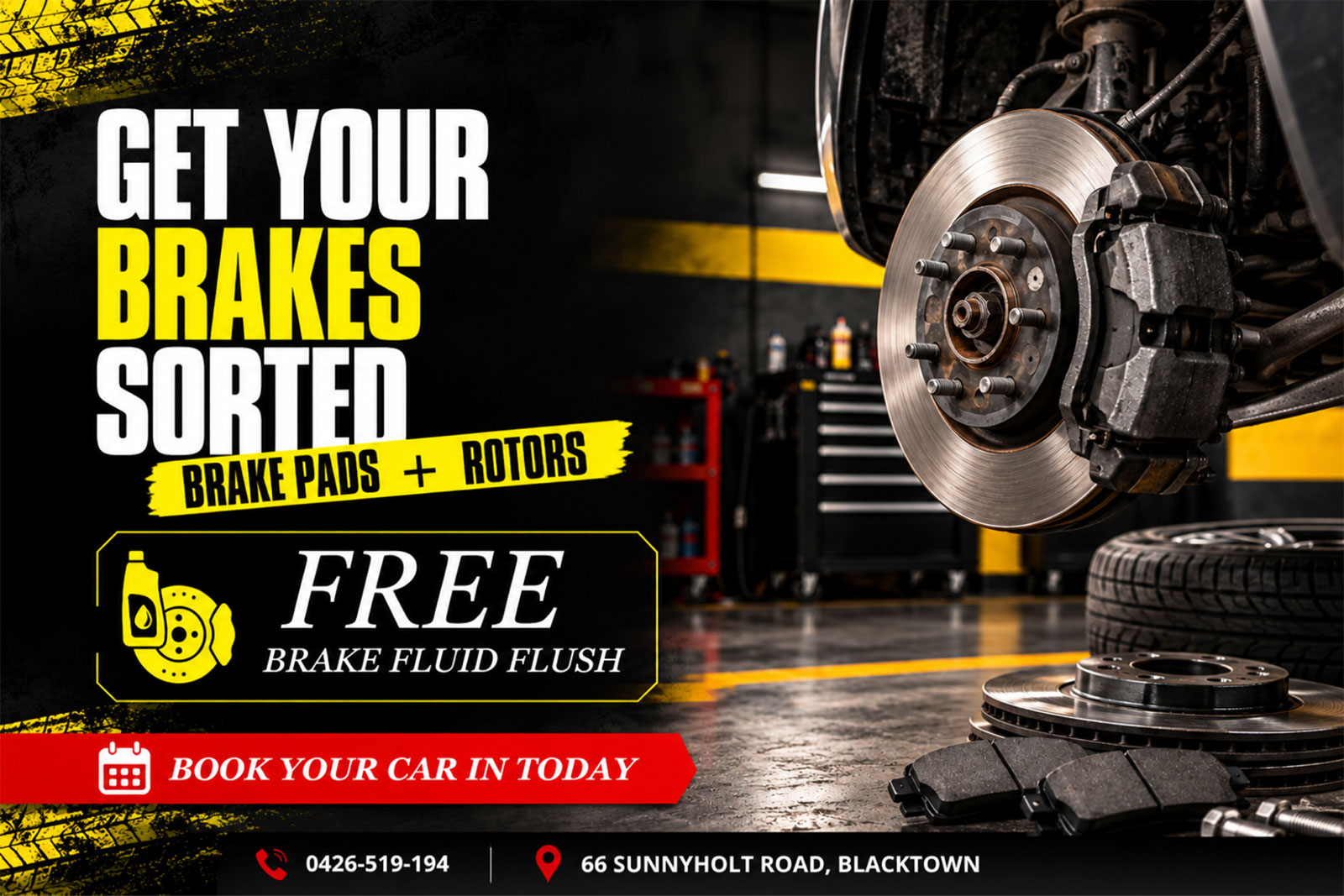
If you’re getting your brake pads and rotors sorted, ask our team about our current offer with a FREE brake fluid flush.
📍 SK Automotive & Tyres
66 Sunnyholt Road, Blacktown NSW
📞 0426 519 194
Get your brakes sorted and book your car in today.